Medical Instrument Case Foam Inserts: Design & Sourcing Guide
Medical instrument case foam inserts are designed to organize equipment, keep components in defined positions and help reduce movement during storage and transport. For a B2B project, the insert should be developed around the actual case, instrument layout and handling conditions—not selected from foam thickness alone.
YUTANO supplies custom EVA and IXPE foam insert solutions for medical instrument cases and other protective equipment cases. This guide explains the main design and sourcing decisions buyers should confirm before requesting a sample or quotation.
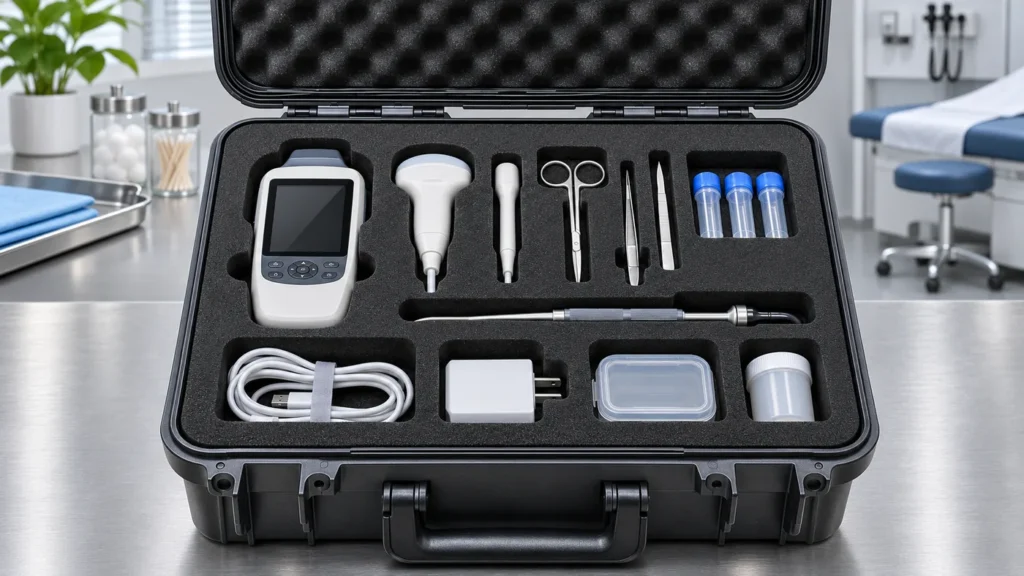
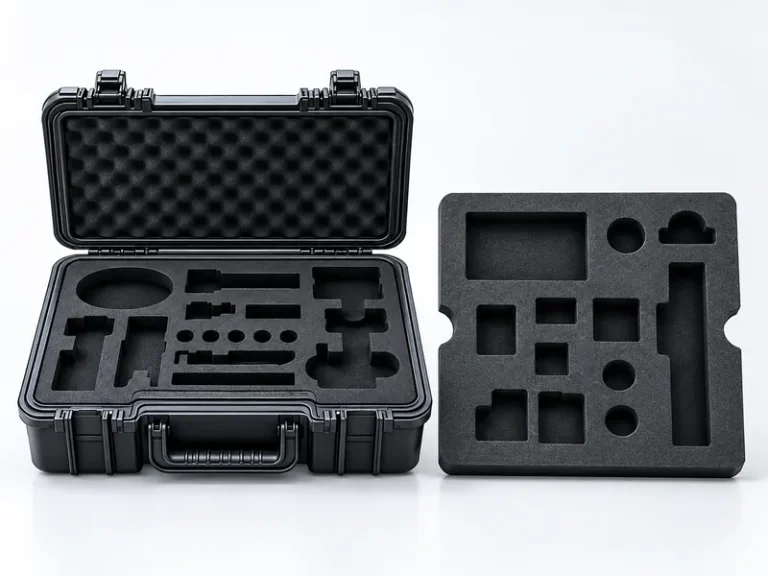
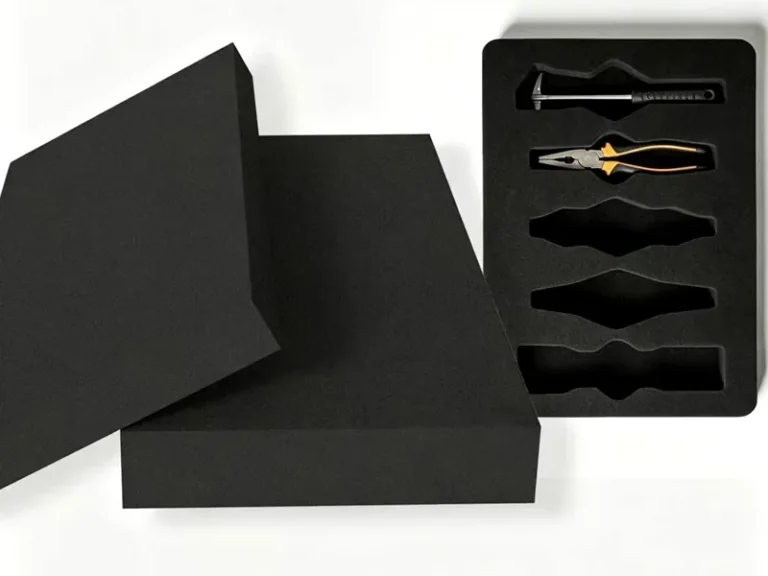
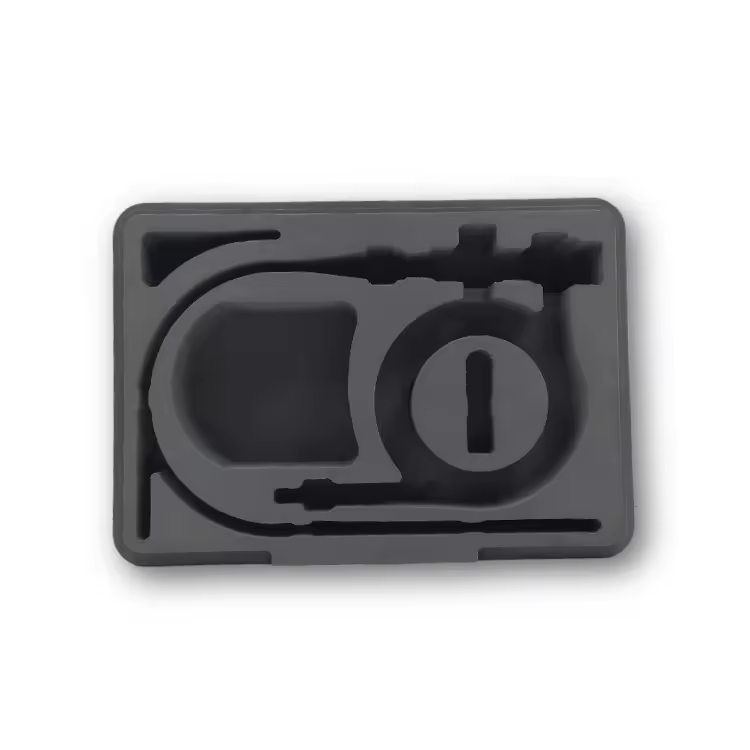
The insert shown above is an illustrative reference, not a fixed stock product. YUTANO can use a customer-supplied photo, drawing, case dimensions or physical sample as a starting point, then adjust the cavity layout, overall size, thickness, foam material, color, layer structure and logo details to match the project. The final specification is confirmed with the buyer before sampling and repeat production.
1. Define what the case needs to protect
Start by listing every item that will be stored in the case. This may include instruments, probes, cables, adapters, chargers, removable accessories and documents. Record the quantity, approximate dimensions, weight and preferred orientation of each component.
The insert may need to keep items separated, prevent them from shifting, make frequently used components easy to reach or present a complete kit in a consistent layout. These goals can affect cavity shape, foam firmness, layer construction and the amount of clearance around each item.
Also describe the expected handling conditions. A case used mainly for organized storage may have different requirements from one that is frequently carried, shipped or opened in the field. The design should reflect the real use environment rather than relying on a generic protective-insert specification.
2. Design Medical Instrument Case Foam Inserts Around the Equipment
The internal dimensions of the case are the starting point for the insert. If possible, provide the case model or a dimensioned drawing. If neither is available, clear measurements and photographs of the inside of the case can help the supplier review the available space.
Medical instrument case foam inserts can be developed from a reference photo, drawing, case measurements or a physical sample, rather than being limited to the pictured layout. Buyers can request changes to the overall length and width, thickness, EVA or IXPE material, density or hardness, color, cavity positions, removable layers and logo placement. YUTANO reviews the requested details and confirms the design and sample requirements before bulk production.
For each instrument, provide a drawing, sample or reference photograph with key dimensions. Identify fragile areas, protruding connectors, buttons, lenses, screens or other features that should not carry unnecessary pressure. Confirm whether the instrument should sit flat, at an angle or in a specific orientation.
Cavity design should balance retention and removal. A cavity that is too loose may allow movement, while one that is too tight can make removal difficult or place pressure on sensitive features. Finger pulls, access notches, removable layers and separate accessory compartments can make the case easier to use.
3. Choose EVA or IXPE based on the application
EVA and IXPE are both used in protective foam applications, but the suitable material depends on the required feel, structure, processing method, surface and project specification. A buyer should not assume that one material is automatically suitable for every instrument case.
Density and hardness should be considered together. Density describes mass per unit volume; hardness describes resistance to indentation under a specified test method. Neither value alone predicts the performance of a finished insert. Review the EVA foam density guide and EVA foam hardness guide if the target specification is not yet clear.
Thickness also depends on the instrument dimensions, cavity depth, available case height and the required support below and around each item. A thicker insert is not automatically more protective. For more detail, see how to select EVA foam thickness for cushioning and protection.
For instruments with delicate surfaces, discuss the contact surface and any required cover layer with the supplier. The selected material and finish should be checked against the actual instrument housing and the intended storage conditions.
4. Decide whether the insert needs one layer or several
A single-layer insert may be suitable when all components can be held at one depth. A layered construction can provide different cavity depths, a removable top layer or separate storage for accessories. It can also help use the available case height more efficiently.
Before confirming a layered design, review the bonding method, layer thicknesses, cavity alignment and how the user will remove each layer. If the insert includes a lid layer, confirm how it contacts the instruments when the case is closed. Avoid relying on lid pressure to hold delicate items unless that contact has been deliberately designed and tested.
5. Select a practical manufacturing process
CNC routing is often considered for detailed cavity layouts, changing designs, prototypes and projects where the geometry needs to be reviewed before repeat production. Die cutting may be suitable for repeatable shapes and established designs when the order quantity and tooling investment make sense. Some projects may combine processes or use lamination and other finishing steps.
The right route depends on the cavity geometry, material thickness, dimensional requirements, order quantity and tooling cost. There is no universal rule that one process is always better. Read our CNC vs. die cutting guide for a practical comparison.
6. Approve a sample before repeat production
A drawing review is useful, but a physical sample can reveal details that are difficult to judge on screen. Place every instrument and accessory in the sample insert. Check whether each item fits in the intended orientation, stays in position during normal handling and can be removed without excessive force.
Review the cavity dimensions, edge finish, layer bonding, surface appearance and the fit inside the actual case. If a change is needed, mark the location and describe the issue clearly. Once the sample is approved, record the material, dimensions, revision, tolerances, finish and other critical requirements so repeat orders can be checked against the same reference.
For a broader view of the development process, see custom EVA foam project development from drawing to mass production.
7. Confirm documentation and intended use
Protective case foam and regulated medical packaging are not the same thing. An insert intended to organize instruments inside a carrying or storage case should not automatically be described as sterile-barrier packaging, biocompatible material or a certified medical-grade product.
If the project has requirements for chemical compatibility, cleanliness, biocompatibility, sterilization, flame performance or other regulated properties, identify the exact requirement and destination market before material selection. Ask for documentation that applies to the specific material grade and finished product. Do not assume that a report for another foam type or material grade proves compliance for the insert being quoted. For projects involving sterile-barrier packaging for terminally sterilized medical devices, the FDA-recognized ISO 11607-1 standard covers materials, sterile barrier systems and packaging systems intended to maintain sterility until the point of use. It does not automatically apply to a foam insert used only to organize equipment inside a carrying case; confirm the applicable requirements for the product’s intended use and destination market.
What to include in a medical instrument case foam insert RFQ
Providing the following information helps a manufacturer review the project more accurately. If some details are not yet available, send the information you have and identify what still needs to be confirmed.
| Information | What to provide |
|---|---|
| Case | Case model, internal dimensions, photos or drawing |
| Instruments | Drawings, dimensions, photos or physical samples |
| Layout | Quantity, orientation, accessory positions and removal preference |
| Material | EVA or IXPE preference, target density or hardness if known |
| Construction | Thickness, number of layers, lid foam and surface requirements |
| Processing | CNC routing, die cutting, lamination, adhesive or other finishing |
| Order | Prototype quantity, expected bulk quantity and repeat-order plan |
| Compliance | Specific standards, test documents and destination-market requirements |
| Delivery | Packaging, labeling, delivery destination and target schedule |
Frequently asked questions
Can a custom foam insert be made from a physical instrument sample?
Yes. A physical instrument sample, case dimensions, photographs or a drawing can be used to review the layout and cavity requirements. A dimensioned drawing is still helpful for confirming critical features and revisions.
Should I choose EVA or IXPE for an instrument case?
The choice depends on the instrument, required support, surface contact, processing route and project specification. Share the application and sample requirements so the material options can be reviewed rather than selecting by material name alone.
Can the insert include removable layers and accessory compartments?
Yes. Layered structures, removable sections, finger pulls and separate accessory cavities can be evaluated according to the case dimensions and instrument layout.
Do you provide samples before bulk orders?
Prototype or sample production can be discussed after reviewing the design, material and processing requirements. Sampling cost and timing depend on the project details and should be confirmed in the quotation.
Does a foam insert automatically meet medical compliance requirements?
No. Compliance depends on the exact material, finished product, intended use and applicable requirements. Buyers should identify the required standard and confirm relevant documentation for the specific material and product before ordering.
Can you customize an insert based on a product photo or reference image?
Yes. A reference image can help define the general appearance and layout, but final dimensions and critical details should be confirmed with measurements, drawings or a physical sample where needed. YUTANO can adjust the size, thickness, foam material, color, cavity positions, layers and logo according to the project specification. The pictured design is an example, not a fixed stock item.
Discuss Your Medical Instrument Case Insert Project
YUTANO develops made-to-order EVA and IXPE foam inserts for protective instrument cases. If you have a reference photo, drawing, case dimensions or physical sample, send it with your target quantity. We can review requested changes to overall size, thickness, material, color, cavity layout, layer structure and logo placement, then discuss prototyping and bulk production. Visit our medical instrument case foam insert product page or submit your project details through our Request a Quote page.