Custom EVA Foam Project Development: Drawing to Mass Production
Custom EVA foam project development is easier to control when the buyer and supplier work from one approved specification. A clear workflow helps prevent changes in material, dimensions, fit, appearance or packing from being lost between the drawing, sample and bulk order.
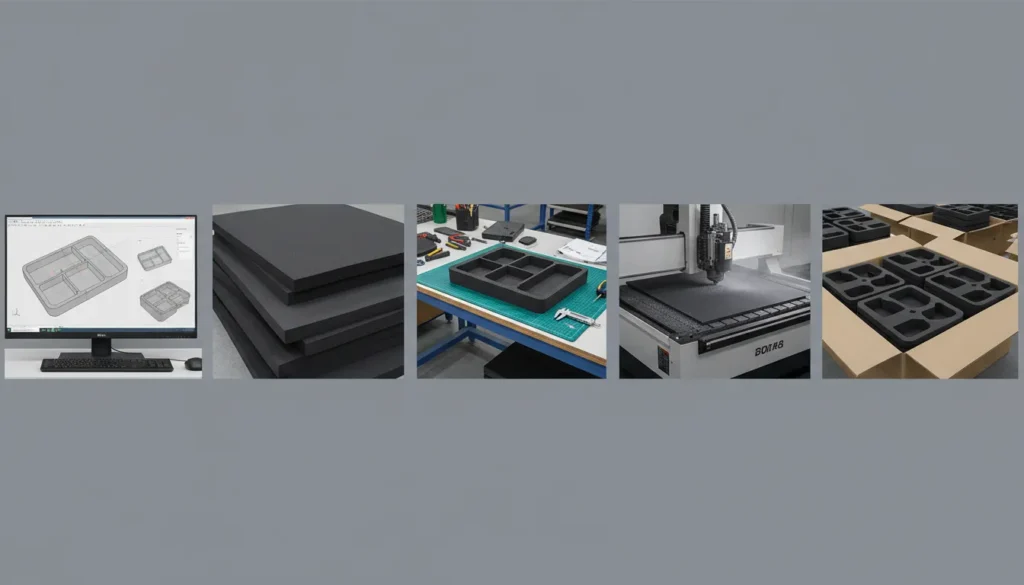
1. Requirements review
The first step is to define what the product must do. A packaging insert needs the product dimensions, case space, protection level and removal method. An industrial component may need compression, sealing, adhesive or wear requirements. A sports or leisure product may require a specific feel, color, buoyancy or assembly.
- Application and product to be protected or supported
- Finished dimensions, available space and critical tolerances
- Expected quantity, repeat-order plan and target schedule
- Material preferences, color and surface appearance
- Drawings, CAD files, photographs or physical reference samples
- Destination, labeling and packing requirements
If key information is missing, the quotation should identify assumptions rather than treating them as confirmed requirements. See what to include in a custom EVA foam quotation request.
2. Material and construction review
Material selection should follow the function of the product. Density or hardness, thickness, color, texture and layer construction can affect fit, cushioning, edge appearance and cost. Adhesive backing, fabric or film lamination, contrasting layers and case bonding should be discussed at the same stage.
When the buyer does not know the exact material grade, the supplier can review the application and suggest a sample range. The final material must still be confirmed through a written specification or approved physical sample before bulk production.
3. Drawing and design-for-manufacturing review
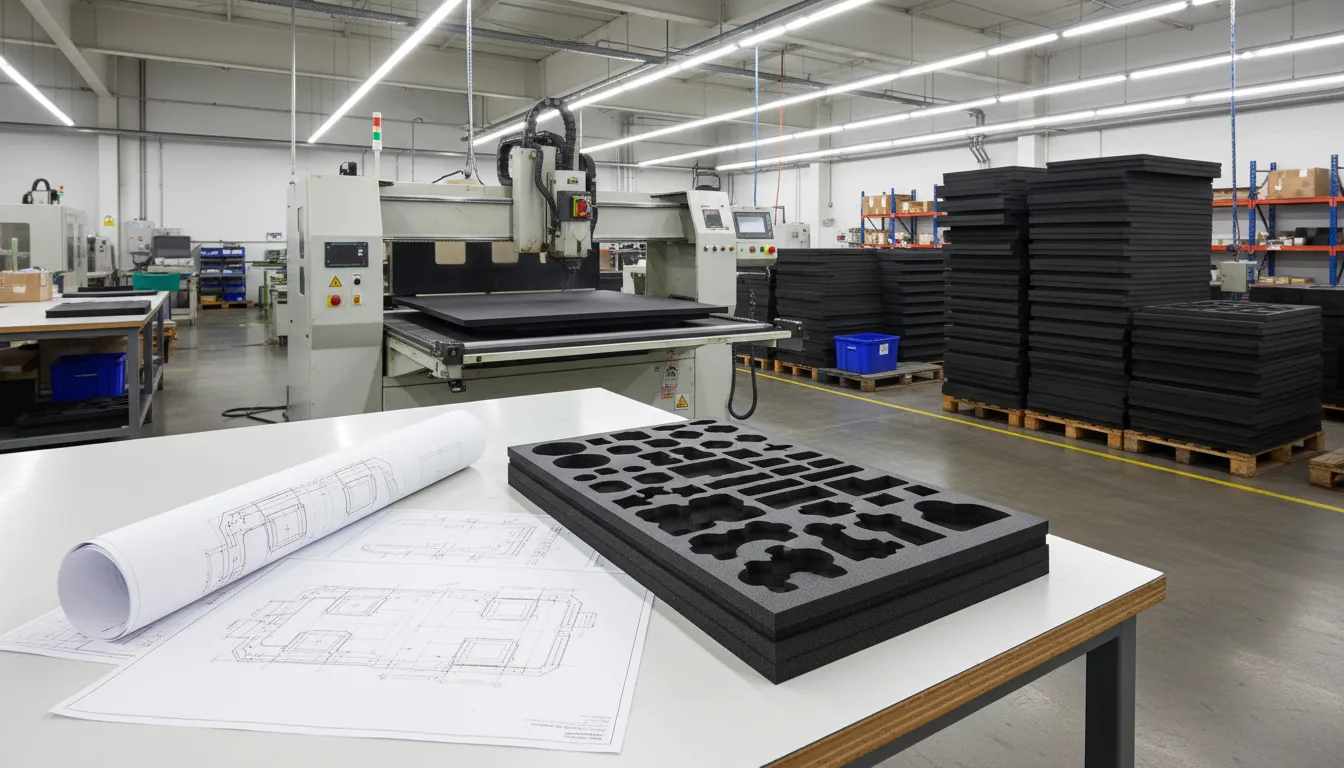
The drawing translates the project into measurable requirements. It should show the overall size, cutouts, cavity depths, radii, tolerances and any visible surfaces. For a case insert, the case’s usable internal dimensions and the product orientation are as important as the product outline.
A design-for-manufacturing review checks whether narrow walls, deep pockets, sharp internal corners, thin layers or adhesive areas are practical for the selected foam and process. The review may also compare CNC routing and die cutting, material nesting and the effect of tooling on repeat orders.
4. Quotation and project assumptions
A useful quotation should describe what is included: material, dimensions, processing, tooling or setup, quantity, packing and delivery terms. Prototype pricing and bulk pricing may be different because programming, tooling, material use and production speed change with quantity.
Price alone cannot confirm suitability. The quotation should be checked against the same revision of the drawing and requirements that will be used for sampling.
5. Prototype or sample
A representative sample allows both sides to verify fit, dimensions, material feel, color, edge appearance, layer alignment and packing assumptions. A prototype may be produced with a flexible process even if a different process is planned for repeat production. Any expected difference between prototype and bulk production should be stated before approval.
How to give useful sample feedback
- Reference the drawing revision and sample identification.
- Measure critical dimensions using the agreed method.
- Test the product fit, removal and protection function.
- Photograph the issue and identify the exact location.
- Separate required corrections from optional preferences.
- Confirm whether another sample is needed before approval.
6. Approval and production release
Approval should identify the final drawing, material specification, color, sample reference, logo or graphics, packing and quantity. A short message such as “sample approved” is risky if several versions have been discussed. The approved reference should be clear enough for the production team and future repeat orders.
| Approval item | What should be confirmed |
|---|---|
| Drawing | Revision, dimensions, tolerances and cavity depths |
| Material | Type, density or hardness, thickness, color and layers |
| Appearance | Visible edges, logo, printing and surface requirements |
| Packing | Unit packing, labels, carton quantity and marks |
| Commercial | Quantity, tooling, delivery terms and target schedule |
7. Bulk production and in-process checks
Bulk production follows the released specification. Checks may be made on incoming material, first-off parts and selected production stages. The inspection plan should match the risk of the product; not every dimension requires the same frequency. Critical fit, cavity depth, layer alignment, adhesive position and visible appearance normally deserve clear acceptance criteria.
For a separate explanation of cutting, lamination, finishing and packing operations, read our EVA foam manufacturing process guide.
8. Final inspection, packing and shipment
Before dispatch, the supplier should confirm the order quantity, packing condition, labels, carton arrangement and agreed documents. Packing must protect the foam from deformation, dirt and surface damage during storage and transport. The consignee details and destination requirements should be checked before shipment.
9. Control repeat-order revisions
A repeat order should reference the previous approved specification, not only the old purchase order number. If dimensions, material, packaging or quantity change, issue a new revision and confirm whether a new sample or price review is required.
Frequently asked questions
Can a project start without a CAD drawing?
Yes. Clear dimensions, photographs and a physical sample can support an initial review, but a production drawing is recommended before custom tooling or bulk production.
Is one prototype always enough?
Not always. Complex fit, new materials, visual requirements or major feedback may require another sample. The need should be based on risk, not an automatic number of rounds.
When does the bulk production schedule begin?
The production schedule should be confirmed after the final specification, sample approval, quantity, payment terms and material availability are agreed.
How long does it take to move from drawing to mass production?
There is no single lead time for every project. Timing depends on drawing readiness, material availability, tooling or setup, sample rounds, approval speed, order quantity and packing requirements. Confirm the production schedule after the scope, sample plan and final specifications are agreed.
Start with Your Drawing or Sample
Review our Custom Solutions and custom EVA foam inserts guide, or send your project requirements for evaluation.