EVA Foam Manufacturing Process: From Material to Finished Part
The EVA foam manufacturing process is not one universal production line. A sheet, roll, protective pad, case insert and finished OEM product can follow different routes. The reliable approach is to define the application first, then select the material, converting method, finishing steps and inspection plan for that exact part.
1. Confirm the product requirement
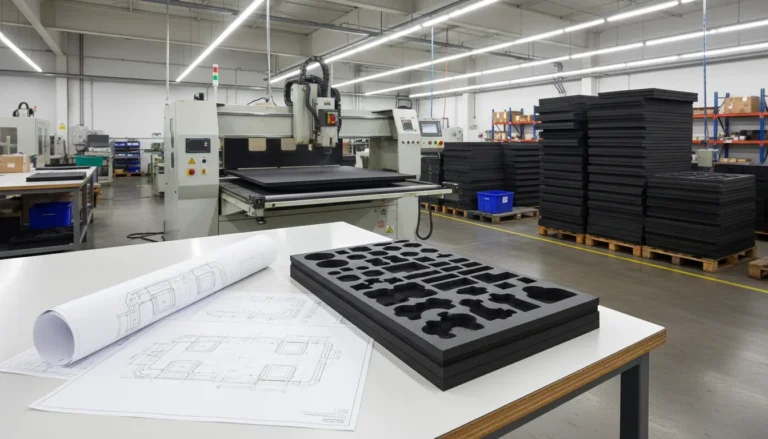
Production should begin with a written requirement rather than a machine choice. The supplier needs the application, finished dimensions, thickness, density or hardness target, color, quantity, tolerances, visible surfaces and packing needs. A drawing is preferred for custom parts. A physical sample or clear photographs can support the review when a drawing is not available.
- Application and expected protection, cushioning, sealing or flotation function
- Finished size, cavity depth, tolerance and fit requirement
- Material format, color, density or hardness and thickness
- Prototype quantity, production quantity and repeat-order expectation
- Adhesive, lamination, logo, printing, assembly and packing requirements
2. Select and prepare the EVA material
EVA may enter production as sheets, rolls or prepared layers. The selected material must match the approved specification, not only a general product name. Density, hardness, thickness, surface texture, color and dimensional tolerance can affect cutting, compression and finished appearance.
Before converting, material may be cut into manageable blanks, conditioned for processing, laminated to another foam layer or combined with fabric, film or adhesive backing. Material direction and surface appearance should be controlled when they matter to the finished product.
3. Convert the foam into parts
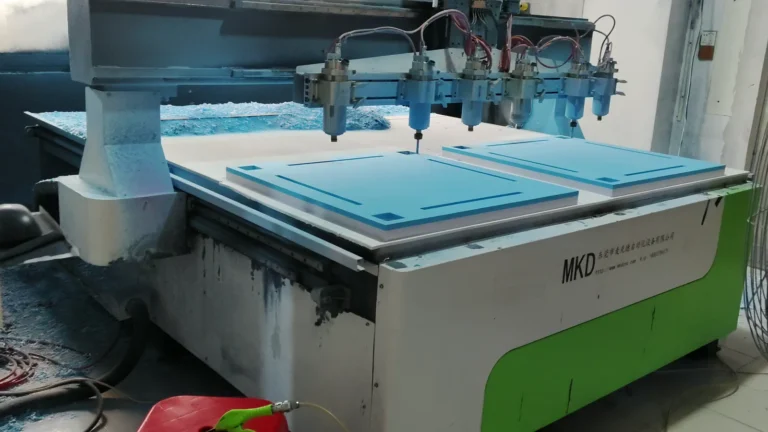
The converting method follows the geometry, thickness, quantity and approved quality requirement. CNC routing and die cutting are common options, but they solve different problems.
- CNC routing: useful for prototypes, controlled-depth pockets and shapes that may change during development.
- Die cutting: efficient for suitable repeat profiles after tooling and nesting are confirmed.
- Slicing and sheet conversion: used to prepare specified sheet thicknesses, strips, pads or roll-based parts.
- Layer construction: several cut layers can be laminated to create deeper cavities, contrasting colors or a finished base.
Flexible foam can compress during cutting, so tolerance must be realistic for the material and process. Internal corners, narrow bridges, deep cavities and exposed edges should be reviewed before tooling or bulk production.
4. Lamination, adhesive and assembly
Many EVA products require more than one cut. Layers may be laminated to build thickness or create a two-color presentation insert. Adhesive backing may be applied for pads, seals or components that will be bonded into another product. Inserts can also be fitted into cases or combined with other parts.
The bonding method should be selected for the exact foam, mating surface, operating environment and expected service life. Release liner, bonding area and assembly position should be included in the approved specification.
5. Add graphics and finishing
Where required, finishing can include a logo, printed marking, contrasting layer, label or product-specific packaging. The method depends on the surface, design detail, color requirement and intended use. A visual sample should be approved when appearance is important because foam texture can influence print and edge results.
6. Inspect during production
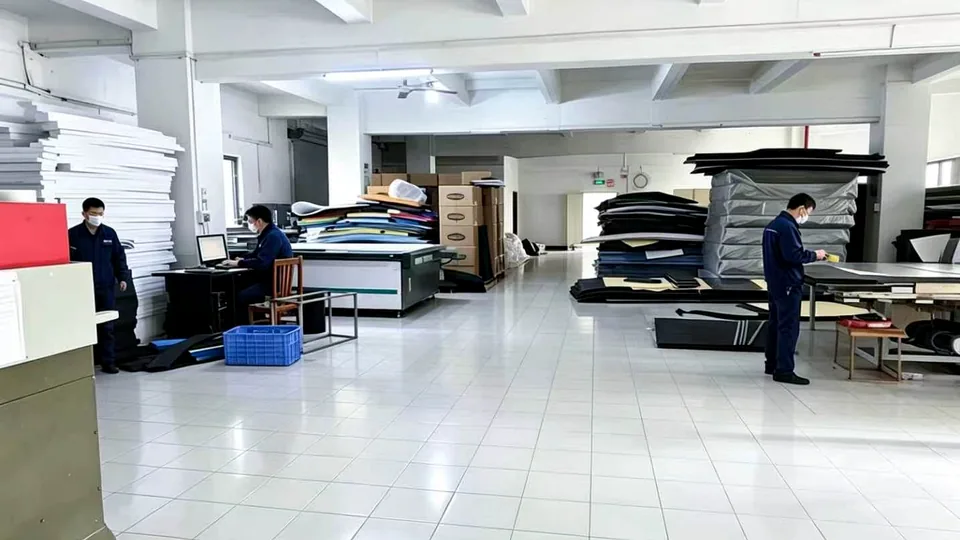
Quality control is not only a final check. Incoming material, first-off parts and in-process dimensions should be reviewed against the drawing or approved sample. Inspection points depend on the product, but may include material identity, dimensions, cavity fit, thickness, layer alignment, adhesive position, surface appearance and quantity.
| Stage | Typical control point | Buyer reference |
|---|---|---|
| Incoming material | Type, thickness, color and agreed specification | Material requirement or approved sample |
| First article | Dimensions, fit, cavity depth and appearance | Drawing and sample approval |
| In-process | Cutting, lamination, adhesive and assembly consistency | Production specification |
| Final packing | Quantity, labels, protection and carton arrangement | Packing instruction |
7. Pack and prepare the shipment
Finished foam parts should be packed to limit deformation, contamination and surface damage. Packing may use bags, separators, cartons, labels or product-specific protection. The correct method depends on part shape, surface sensitivity, quantity and transport conditions. Export marks and documents should be confirmed before dispatch.
Keep a controlled specification for repeat orders
Repeatability improves when the buyer and supplier retain the same approved drawing, material specification, sample reference, process notes and packing details. If any requirement changes, it should be recorded as a new revision rather than communicated only through informal messages.
Frequently asked questions
Does every EVA product require a mold or cutting die?
No. Tooling depends on the product and process. CNC-routed prototypes may not require a cutting die, while repeat die-cut parts normally require approved tooling.
Can one product use several processes?
Yes. A custom insert may combine slicing, CNC routing, die cutting, lamination, adhesive backing, printing and case assembly.
Should a sample be approved before bulk production?
A representative sample is recommended for a new custom product. It allows fit, dimensions, appearance and packing assumptions to be reviewed before the production specification is released.
Discuss Your EVA Foam Product
Review our custom EVA manufacturing capabilities, browse EVA foam products, or send a drawing and project requirements for evaluation.