CNC vs Die Cutting for EVA Foam: Process Selection Guide
CNC vs die cutting for EVA foam is a process decision that affects geometry, tooling, cost and repeat production. Both methods can convert EVA foam into custom parts, pads and packaging inserts. Neither process is automatically better. The practical choice depends on part geometry, cavity depth, material thickness, tolerance, visible edges, quantity, tooling cost and how often the design may change.
How CNC routing works for EVA foam
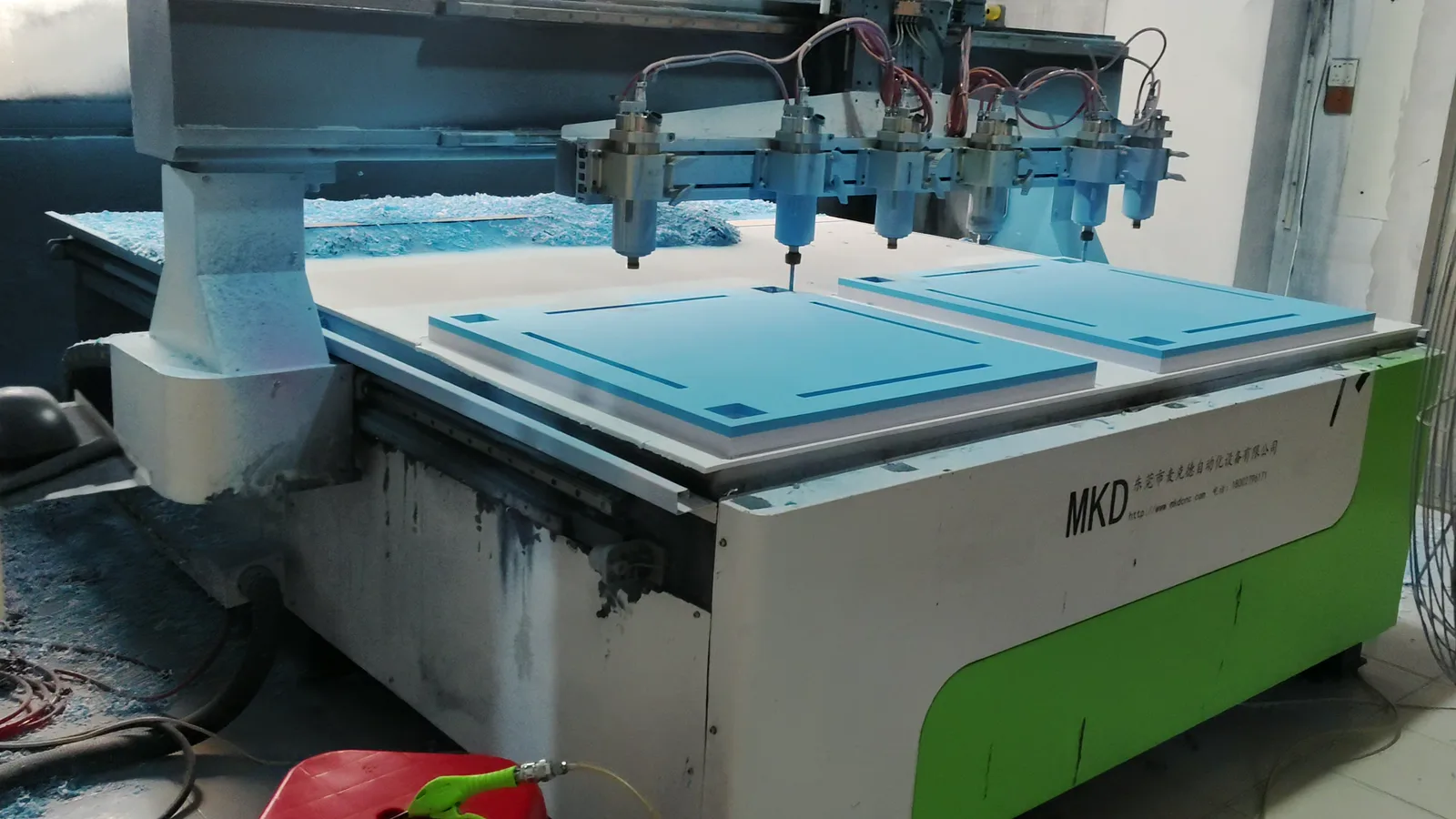
CNC equipment follows a programmed tool path to remove material or cut a profile. It can create controlled-depth pockets, deeper cavities and shapes that are difficult to produce as one flat die-cut layer. CNC routing is often considered for prototypes, lower-volume projects and designs that may require revision.
- Useful for controlled-depth cavities and three-dimensional features
- Programming can be updated without making a new cutting die
- Suitable for prototypes and design validation
- Tool diameter and access affect internal corners and narrow features
- Machining time, edge appearance and material holding must be reviewed
How die cutting works for EVA foam
Die cutting uses approved tooling to cut repeat profiles from suitable foam sheets or laminated material. Once tooling and nesting are confirmed, it can provide efficient repeat production for appropriate geometries and thicknesses. Tooling cost must be considered together with quantity, expected repeat orders and design stability.
- Efficient for repeat two-dimensional profiles
- Often considered when the design and material are stable
- Tooling, setup and material nesting affect total project cost
- Very deep cavities may require several die-cut layers
- Design revisions may require modified or replacement tooling
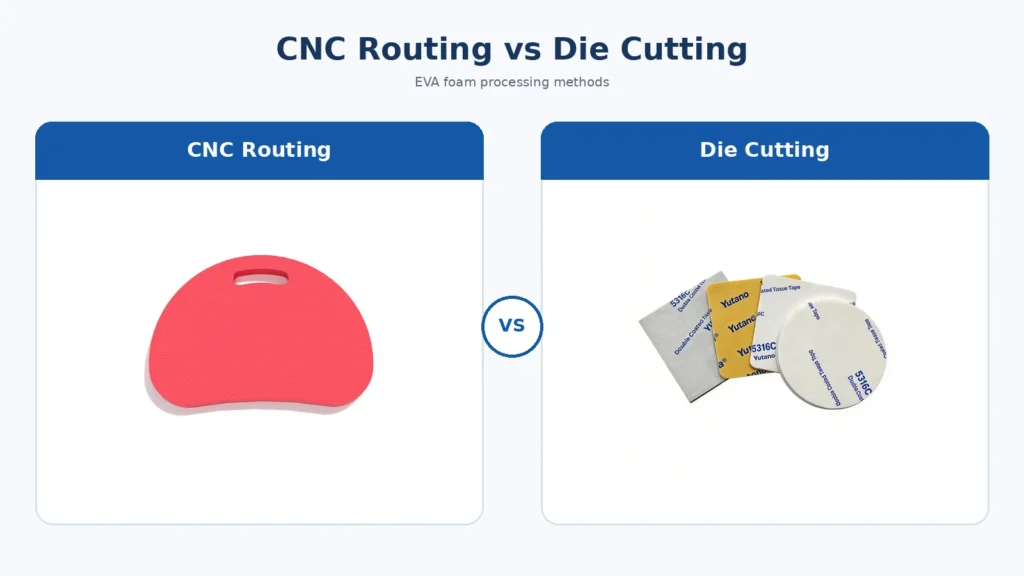
CNC vs die cutting: comparison table
| Factor | CNC routing | Die cutting |
|---|---|---|
| Geometry | Controlled-depth pockets and programmable features | Repeat flat profiles and layered constructions |
| Prototype changes | Program can be revised without a new die | Tooling changes may be required |
| Quantity | Often practical for prototypes and suitable lower volumes | Often efficient for suitable repeat production |
| Cost drivers | Programming, machining time and tool access | Tooling, setup, nesting and production quantity |
| Depth | Can create routed pockets within material limits | Deeper forms may be built from several layers |
Tolerance and edge appearance
Tolerance should be realistic for the selected foam, thickness and process. Flexible foam can compress during cutting and measurement. CNC tooling may leave a routed surface in a cavity, while die-cut edges depend on the material, thickness, tooling and production setup. If an edge will be visible in a presentation insert, state the appearance requirement before sampling.
Why some inserts use both processes
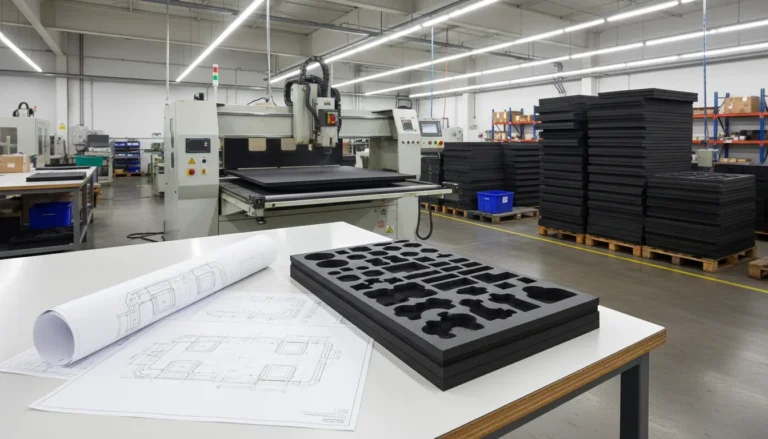
A laminated insert may combine CNC-routed pockets with die-cut top, base or accessory layers. A prototype may first be CNC processed for evaluation, followed by die-cut production when the final geometry and volume support tooling. The process plan should follow the approved drawing rather than forcing every feature into one method.For a broader overview of the EVA foam manufacturing process, including material preparation, cutting, lamination and inspection, see our manufacturing process guide.
See the custom EVA foam inserts guide for cavity design, layer construction and sample approval considerations.
Process selection checklist
- Confirm the material grade, thickness and layer construction.
- Provide a drawing with finished dimensions, depths and tolerances.
- Identify visible edges and appearance requirements.
- State prototype quantity, production quantity and repeat-order expectations.
- Confirm adhesive, lamination, printing or assembly requirements.
- Approve a representative sample before bulk production.
What to include in a quotation request
Send a drawing, dimensions, tolerances, material thickness, expected quantity and photographs of the application. State which edges or surfaces are visible and whether adhesive, lamination, graphics, individual packing or case bonding are required. If you do not know the best process, describe the function and let the supplier compare practical routes.
Frequently asked questions
Is CNC always more accurate than die cutting?
No. Achievable results depend on the foam, thickness, geometry, tooling, setup and inspection method. Tolerances should be agreed for the exact part.
Which process is cheaper?
Cost depends on geometry, material use, tooling, machining time and quantity. Compare total project cost rather than only the unit price.
Can the two processes be combined?
Yes. Layered inserts and custom components may use CNC routing, die cutting, laminating and other fabrication steps in one construction.
Request a Process Review
Review our custom processing options, browse processed EVA foam parts, or send your drawing and requirements.